"Travel is fatal to prejudice, bigotry and narrow mindedness, and many of our people would sorely need it on these accounts" - Mark Twain
- JarkkoHalme

- Jul 2, 2025
- 4 min read
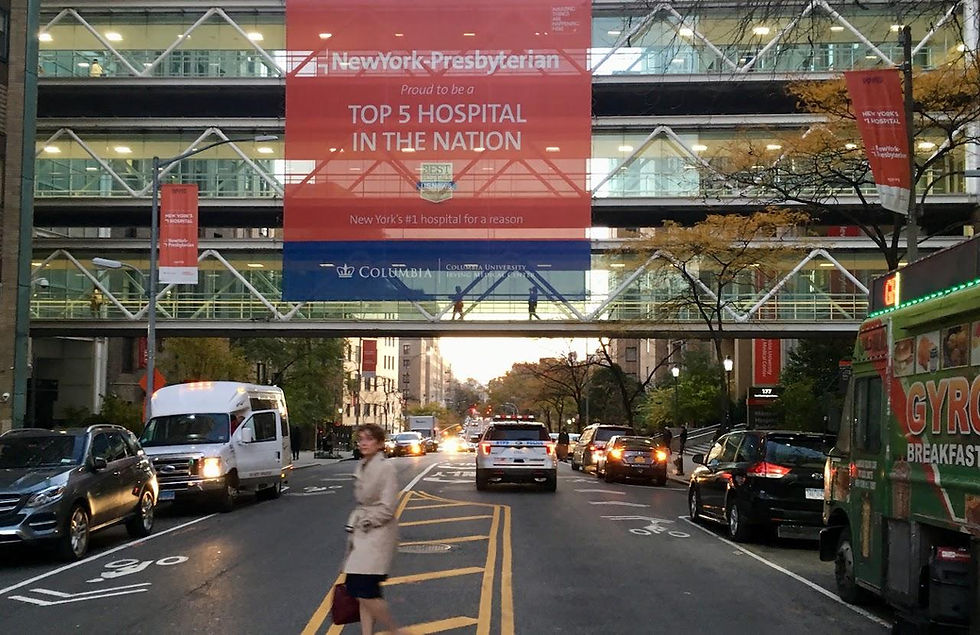
Remembering my visit to Dr. Lawrence Lenke, New York Presbyterian Spine Hospital, Columbia Medical University in November 2019.
In Finland, the surgical treatment of spinal deformities is centralized to university hospitals. Even among these hospitals, the organization of deformity care varies, and not all types of deformities are treated in every university hospital. This is primarily due to the relatively small number of patients and the limited number of surgeons specialized in deformity surgery. Especially in adult deformity surgery, treatment approaches are inconsistent because of the complexity and high risk of complications associated with the procedures.
Spinal deformities in adults significantly reduce quality of life—often more so than conditions like diabetes, rheumatoid arthritis, or chronic obstructive pulmonary disease (1). Traditionally, these patients have been offered various conservative treatment options, and surgery was not considered feasible or advisable. However, advancements in spinal surgery over the past 20 years have greatly improved the ability to treat adult spinal deformities and enhance patients’ quality of life—even in Finland (2).
Although correcting spinal deformities is now technically feasible, these surgeries are often extensive and pose multiple challenges. Successful deformity surgery requires the development and coordination of several aspects of care—from patient selection to postoperative rehabilitation.
To further develop spinal deformity surgery at Kuopio University Hospital, I spent one month in November 2019 as a clinical visitor at Columbia University Medical Center’s New York Presbyterian Spine Hospital with spine surgeon Dr. Lawrence Lenke. Dr. Lenke is widely regarded as the foremost expert in the field, with over 27 years of experience in both pediatric and adult deformity surgery. He has authored more than 300 original scientific articles and several books on the topic. He developed the internationally recognized Lenke Classification for adolescent idiopathic scoliosis, which quickly replaced the older King-Moe classification. Dr. Lenke serves in numerous expert roles and is a globally influential opinion leader. He directs the New York Presbyterian Spine Hospital, oversees eight spine surgeons, and trains two spine surgery fellows at a time. He currently performs about 100 deformity surgeries annually on both children and adults. Nearly 200 colleagues from around the world visit his OR every year to observe his work.
The hospital's weekly schedule began with a Monday 6:00 AM team meeting where the fellows presented approximately 30 patients—those who had surgery the previous week and those scheduled for the current week—while participants had breakfast. A quick ward round followed. The ward housed patients who had already undergone surgery or were undergoing preoperative halo traction. After the ward round, the day continued in the operating room, where surgeries typically began between 8:30 and 9:00 AM. Dr. Lenke operated on one deformity patient per day. The length of surgery varied greatly depending on the deformity. A routine adolescent idiopathic scoliosis surgery lasted about four hours, whereas the most complex surgeries—such as full spinal fusion in a Parkinson's patient—could last up to 12 hours. The most demanding cases were performed in staged procedures on separate days. Dr. Lenke performed all surgeries himself from start to finish. He always operated with a fellow, never alone. Remarkably, he did not take meal breaks, even during long surgeries. After each operation, we had detailed discussions about the case, in an open and collegial atmosphere, with plenty of time for questions and insights.
On Tuesdays at 7:00 AM, we attended an educational session, where a spine surgeon or fellow gave a scientific presentation related to spinal deformities. Wednesday mornings featured administrative and complication meetings, followed by ward rounds and surgery. On Wednesday evenings, a case conference was held, where Dr. Lenke reviewed complex cases with fellows and visiting clinicians—an excellent opportunity for in-depth discussion and learning.
Thursdays were out-patient clinic days starting at 8:00 AM. Patients were brought to examination rooms by a nurse, who helped them change, arranged imaging on the monitors, and prepared all relevant questionnaires (SRS-22, ODI, VAS, etc.). Dr. Lenke, along with his clinical coordinator, research nurse, physiotherapist, fellow, and any visiting clinicians, moved from room to room in sequence. This streamlined process minimized wait times and ensured efficient patient flow. In one day, Dr. Lenke would see over 20 patients, either new surgical candidates or postoperative follow-ups.
All new patients had to "apply" for an appointment by submitting extensive medical history forms and all previous imaging and medical reports. Patients were selected based on protocol to ensure they were likely to benefit from surgery. For example, Dr. Lenke did not accept smokers. His patients ranged from young children with early-onset scoliosis or congenital deformities to adults up to around 70 years old. He did not accept older patients. Nearly all new patients were ultimately scheduled for surgery, which indicated a highly effective pre-screening process. Patients came from many different countries, not just the United States—highlighting Dr. Lenke's global reputation.
Fridays were left open for clinical visitors, as Dr. Lenke and his team focused on administrative tasks or research.
The care of spinal deformity patients at the hospital was clearly well-organized and highly structured. Hospital stays were short, and patients were informed during their initial clinic visit that they would be discharged within a week. However, they were also told to book a hotel in New York and remain there for an additional week until their sutures were removed.
It was encouraging to see that the surgical techniques used at our own hospital for spinal deformity patients were very similar to Dr. Lenke’s. Areas for improvement include patient selection, supportive services, and care processes. Only a small fraction of deformity patients ultimately undergo surgery, and these individuals must be efficiently screened in collaboration with physiatrists. The role of neuromonitoring should be strengthened, and anesthetic protocols fine-tuned.
Nearly all the patients I saw in Dr. Lenke’s clinic were satisfied with their surgical outcome, which reinforced my confidence in the value and justification of the care we provide—despite the high risk of complications. That said, the cost-effectiveness and overall impact of deformity surgery remain unclear, even in the United States. For these reasons, it is essential that care is centralized in dedicated, skilled centers that maintain detailed patient registries and ensure long-term follow-up without gaps.
Pellisé F et al. Impact on health related quality of life of adult spinal deformity (ASD) compared with other chronic conditions. Eur Spine J 2015;24:3-11.
Kyrölä K et al. Long-term clinical and radiographic outcomes and patient satisfaction after adult spinal deformity correction. Scand J Surg 2019;108:343-351.

Comments